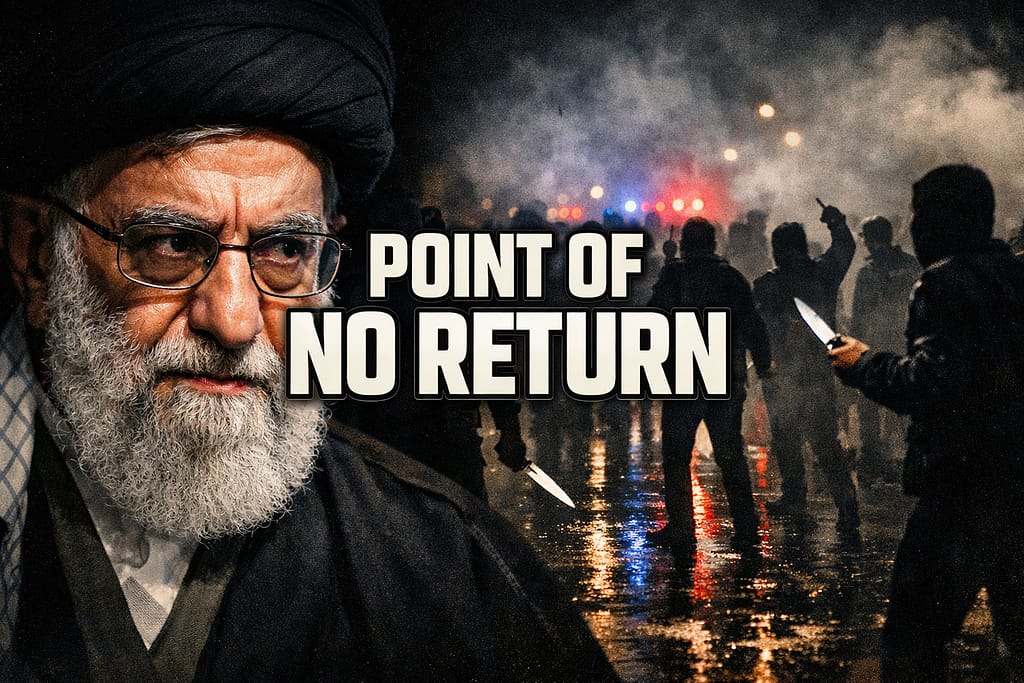
Iran 2026 Explained: How Decades of Pressure Led to a Nationwide Shutdown
Imagine waking up and an entire country gets “locked”… not by tanks—by a button. No signal. No internet. No way to show the world what’s happening—while the streets ignite and the state moves like it’s at war. Because what’s happening in Iran right now isn’t just protests… it’s information warfare: cut the connection, control the narrative, control the outcome. Stay with me—because this didn’t start yesterday. It’s a decades-long chain: revolution, sanctions, economic pressure, repeated protest waves… and now a blackout that could change the region. If you want war-and-history breakdowns that hit like a thriller, like, subscribe, and turn on notifications. Iran didn’t go silent with the sound of bombs. It went silent with the sound of messages that never arrived. In early January 2026, as protests spread, multiple reports said Iran abruptly cut off access to the global internet and disrupted phone connectivity—isolating millions from the outside world within hours. This wasn’t described as random. Monitors and journalists reported a dramatic collapse in traffic, and experts called the shutdown unusually severe and increasingly “precise”—as if the state has learned how to keep parts of its own systems running while the public is cut off. And that’s when the story becomes bigger than protests. Because in a region shaped by decades of pressure, governments don’t always fight first for the street. Sometimes they fight for the narrative. A shutdown slows coordination, slows images, slows proof. It buys time. It forces a country to experience events through fragments, rumor, and fear. Outside Iran, warnings came quickly. Rights advocates and observers said information blackouts can hide violence and make verification difficult. Inside Iran, public voices condemned the blackout as repression—arguing it was designed to obscure what’s happening on the ground. But the anger driving these protests isn’t new. It keeps returning to the same wound: the economy. Reuters described protests fueled by economic hardship, with the currency’s collapse and rising costs at the center of daily anxiety. International data adds context: projections for 2026 reflect extremely high inflation pressure—meaning the price of everyday life can rise faster than people can adapt. Still, Iran’s crisis is never only economic. It’s historical. To understand why a blackout becomes a weapon, you have to go back to 1978–79, when revolution toppled the monarchy and created the Islamic Republic—an order built under political strain, social tension, and a long memory of foreign interference. From the start, survival shaped the system. And survival became tied to confrontation: rivals abroad, opposition at home, and a world that often used isolation as pressure. Sanctions became a permanent part of the landscape. Over decades, U.S. sanctions expanded into broader restrictions, and Iran’s economy began to feel like a long “siege”—external pressure mixed with internal struggles, with ordinary people paying first. That didn’t create Iran’s protest cycles by itself, but it helped shape them. Iran has seen repeated waves of unrest: different triggers, familiar outcomes—public anger, hard security responses, and the state reaching for the same emergency lever: communication control. The 2019 fuel-price protests included a shutdown so deep that monitors reported national connectivity collapsing for days. After 2022, restrictions and disruptions returned again. So when another large-scale blackout appears in January 2026, it doesn’t feel new. It feels like the most refined version of an old tactic. And hovering behind it all is the unresolved confrontation defining Iran’s global position: the nuclear file and the struggle over sanctions relief. The 2015 JCPOA offered limits in exchange for relief, then unraveled after the U.S. withdrew in 2018, leaving the issue as a lasting fault line in Iran’s pressure dynamics. That matters because when a country feels cornered—economically and strategically—leaders often treat unrest not as criticism, but as threat. Reports warned of severe punishments and raised fears that the blackout could cover a harsh crackdown. So Iran “right now” isn’t a single headline. It’s a chain: A revolutionary state born from upheaval. Decades of sanctions and economic strain. Repeated protest waves that trained both society and the state. And now, a blackout that turns a domestic crisis into a modern kind of war—where information becomes terrain, silence becomes strategy, and the world tries to understand a country it can’t fully see.