How Trump Accounts Work: Eligibility, Rules & $6.25B Donation
A massive $6.25 billion donation from tech billionaire Michael Dell and his wife, Susan Dell, has reignited national debate over the newly created “Trump Accounts” — child investment funds established under President Donald Trump’s sweeping tax and spending bill passed in July.
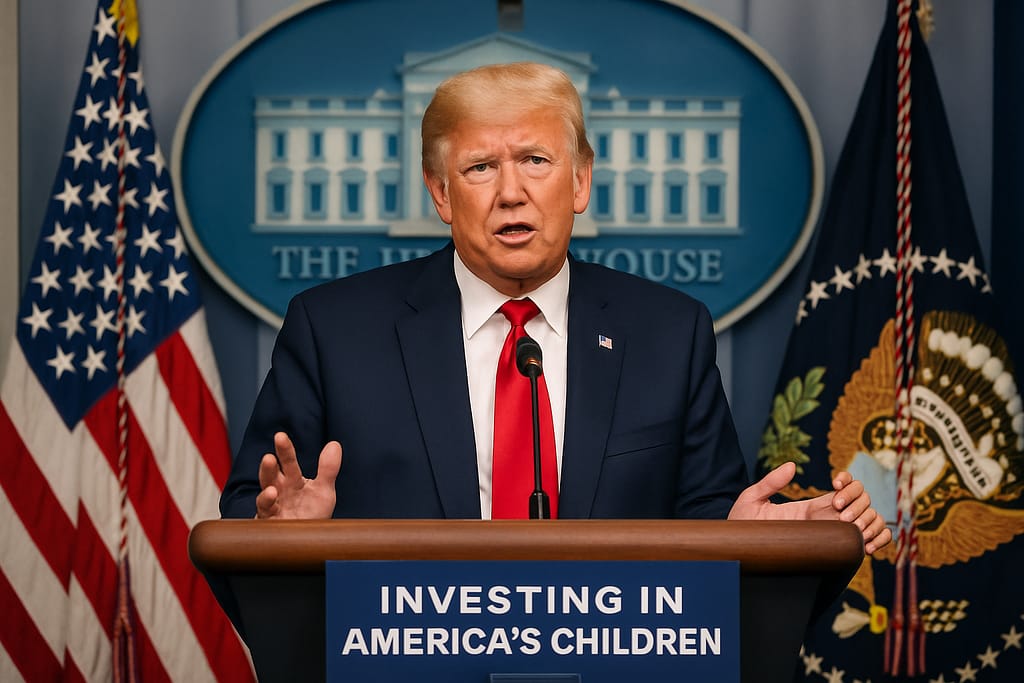
Announced Tuesday at the White House, the donation will provide $250 investment deposits to 25 million U.S. children under age 10, expanding the reach of the federal program that begins in 2026. But as enthusiasm grows, so do questions — because many key details remain unclear.
Who Is Eligible for a Trump Account?
Any U.S. resident under the age of 18 with a Social Security number can open a Trump Account once the system goes live on July 4, 2026.
Parents or legal guardians will be responsible for creating and managing the accounts.
How Much Can Be Contributed?
Each child can receive up to $5,000 per year in contributions from:
- Parents or guardians
- Relatives or friends
- Employers
- Philanthropists or charities
- State or tribal governments
The federal government’s own $1,000 seed deposit for children born between Jan. 1, 2025 – Dec. 31, 2028 does not count toward that limit.
Where Does the Dell Donation Go?
The Dells’ $6.25 billion pledge will fund $250 deposits for children:
- Under age 10
- Living in ZIP codes with median incomes below $150,000
Invest America estimates this reaches families across 75% of all U.S. ZIP codes.

How Is the Money Invested?
Funds will be placed into:
- Low-cost, diversified index funds
- Tracking the overall stock market (e.g., S&P 500)
Accounts will be managed by private investment firms contracted by the government.
When Can Funds Be Withdrawn?
Only after the child turns 18.
At that point, the account converts into a traditional IRA, meaning:
- Withdrawals may trigger taxes or penalties
- Exceptions apply for:
- College tuition
- First-home purchases
- Some qualifying life expenses
Will Trump Accounts Reduce Child Poverty?
Experts say: Probably not.
The Trump administration’s fiscal bill included deep cuts to:
- Medicaid
- SNAP food assistance
- Other social safety programs
Advocacy groups warn the poorest families may struggle to contribute to the accounts — limiting their long-term value.
Amy Matsui of the National Women’s Law Center called the accounts:
“Another tax shelter for the wealthiest households, not a realistic savings tool for families barely meeting basic expenses.”
Immigrant families also face restrictions that could prevent their children from benefitting.
Are Trump Accounts Meant to Encourage Higher Birth Rates?
Multiple sources inside the administration have told reporters that Trump continues to explore pronatalist policies, including:
- $5,000 “baby bonuses”
- Expanded tax benefits for large families
Critics claim Trump Accounts could be part of that strategy.
Bottom Line
The Trump Accounts program represents one of the most ambitious federal investment-for-children initiatives in modern U.S. history — but with unclear rules, tax complications, and deep cuts to social programs, many economists question whether it will help the families that need it most.
The White House says further guidance will be released throughout 2026.