A Closer Look at Canada, Mexico, and the United States Ahead of the 2026 World Cup Draw
As the football world turns its eyes toward Washington, D.C., the three host nations of the 2026 FIFA World Cup — Canada, Mexico, and the United States — are entering a pivotal moment in their preparation. On December 5, the final tournament draw will officially set the stage, transforming years of planning into a clear path toward the opening matches next June.
While the rest of the globe battled through continental qualifiers, the CONCACAF hosts have spent 2025 focusing on refining squads, rebuilding form, and evaluating talent. With momentum shifting constantly across all three nations, here’s where each stands heading into the biggest World Cup ever staged.
🇨🇦 Canada: Defensive Revival and Rising Confidence
Group B | Matches: June 12 (Toronto), June 18 (Vancouver), June 24 (Vancouver)
After their disappointing Gold Cup exit to Guatemala, Jesse Marsch’s Canada has transformed into one of the most disciplined defensive sides in the region. Across six friendlies since July, Canada conceded only one goal, showcasing structural growth and a developing identity.
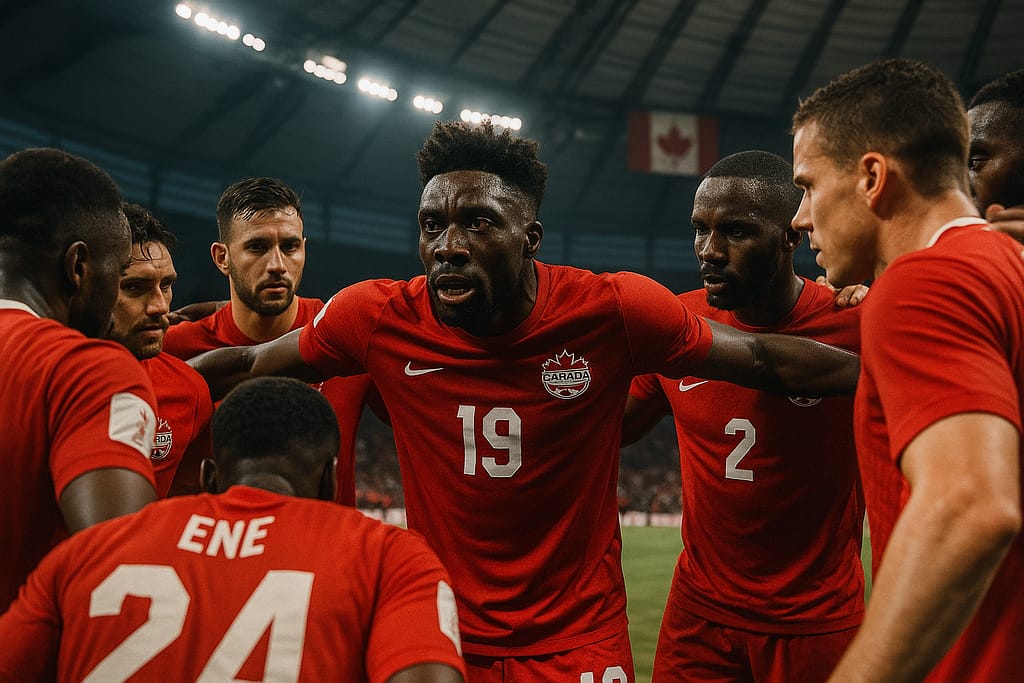
Key Results (Sept–Nov):
- ✅ 3–0 vs Romania
- ✅ 1–0 vs Wales
- ❌ 0–1 vs Australia
- 🤝 0–0 vs Colombia
- 🤝 0–0 vs Ecuador
- ✅ 2–0 vs Venezuela
Marsch’s January training camp will offer much-needed time to refine roles in a squad where several positions remain up for grabs.
Key Strengths:
- Dáinne St. Clair emerging as the preferred goalkeeper
- Alphonso Davies returning from injury, potentially playing left back or midfield
- Strong defensive core: Bombito, Cornelius, Koné, and Eustáquio
- Jonathan David in top-scorer form
Marsch says the talent pool has expanded from “12–13 sure bets to nearly 25 strong contenders.” Competition for spots will be fierce — a good problem for a team eager to impress on home soil.
🇲🇽 Mexico: Searching for Stability After Mixed Results
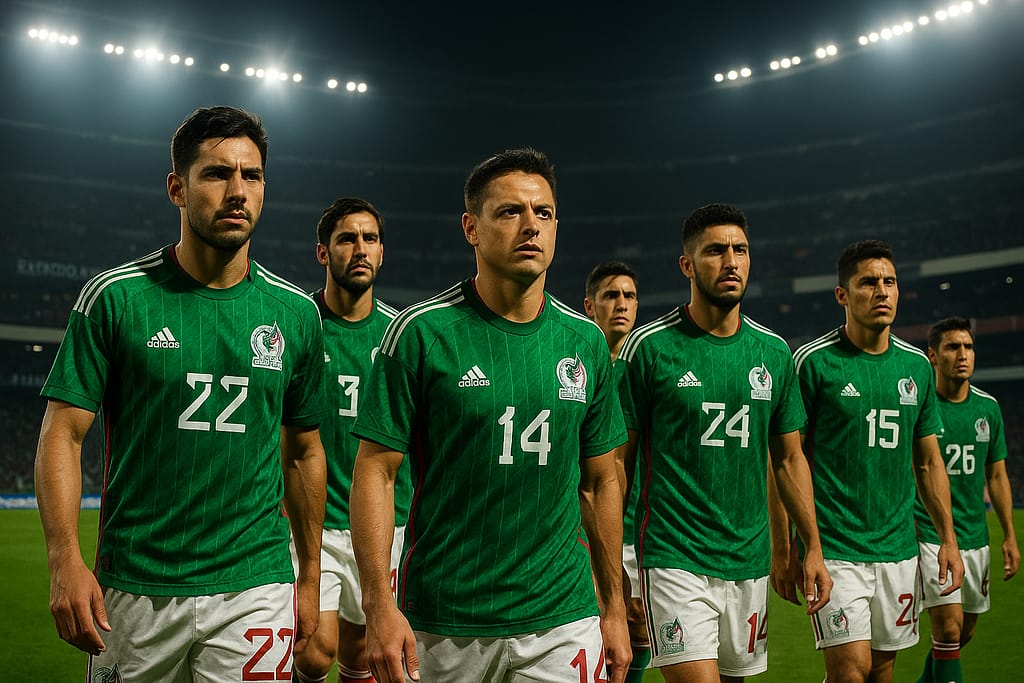
Group A | Matches: June 11 (Mexico City), June 18 (Guadalajara), June 24 (Mexico City)
Fresh off winning their 10th Gold Cup title in July, Mexico expected momentum — but the opposite happened. El Tri failed to win any of their next six matches, scoring just four goals while conceding nine.
Recent Results (Sept–Nov):
- 🤝 0–0 vs Japan
- 🤝 2–2 vs South Korea
- ❌ 0–4 vs Colombia
- 🤝 1–1 vs Ecuador
- 🤝 0–0 vs Uruguay
- ❌ 1–2 vs Paraguay
Major Questions Facing Aguirre’s Squad:
- Goalkeeper dilemma: Malagón’s errors could push 40-year-old legend Guillermo Ochoa back into the starting role.
- Midfield talent surge: 17-year-old Gilberto Mora continues to impress.
- Defensive reliability: Montes, Vázquez, Álvarez provide strong structure.
- Attacking concerns: Lack of consistency without Santiago Giménez, who returns in 2026.
As Aguirre put it:
“Some players want to play and can. Others want to but aren’t at that level yet. The mission is finding the right 11 for June.”
🇺🇸 United States: A Dramatic Course Correction Under Pochettino
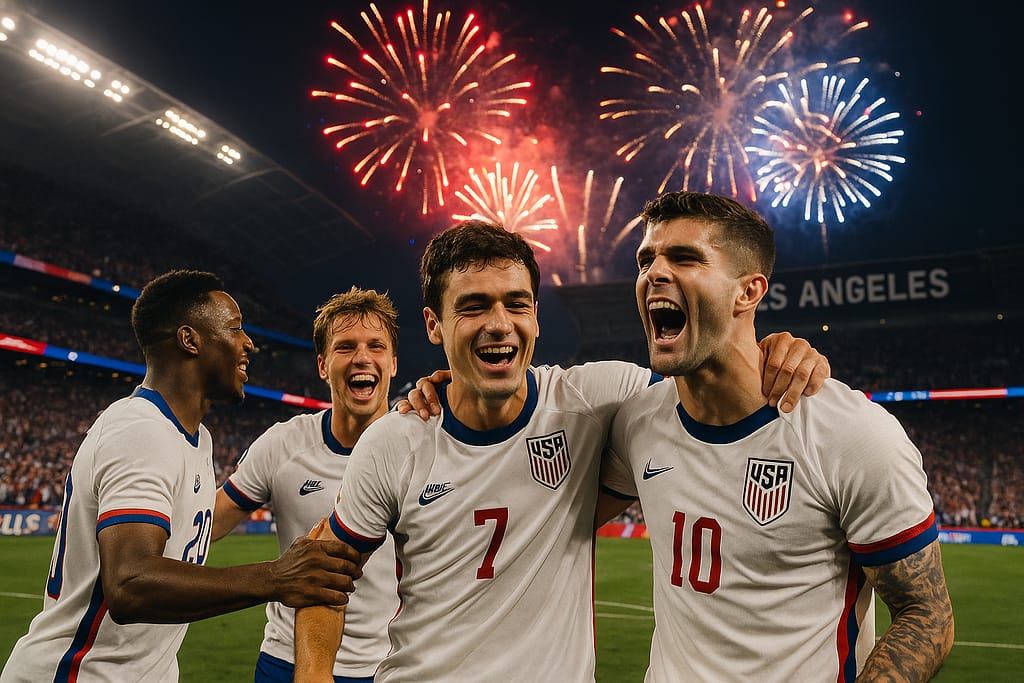
Group D | Matches: June 12 (Los Angeles), June 19 (Seattle), June 25 (Los Angeles)
No host nation has undergone more tactical evolution than Mauricio Pochettino’s USA. After early setbacks — including defeats to Panama, Canada, and Mexico in the Gold Cup — the U.S. rebuilt from the back and switched to a three-defender system.
The results were immediate.
Five Consecutive Matches Unbeaten — all against World Cup-bound sides:
- 🤝 1–1 vs Ecuador
- ✅ 2–1 vs Australia
- ✅ 2–1 vs Paraguay
- ✅ 5–1 vs Uruguay
Breakout Performances:
- Gio Reyna rediscovered top form with goals, assists, and high-pressure intensity.
- New fullback stars Max Arfsten and Alex Freeman added depth.
- Midfield rotation thriving with Adams, McKennie, Tessmann, Roldán.
- Attacking weapons deepening: Balogun, Pulisic, Weah, Tillman, Luna.
Pochettino emphasized the biggest transformation:
“The result doesn’t give us points — it gives us conviction. We are finally on the right path.”
⭐ Final Thoughts: Host Nations Enter 2026 With Momentum — and Pressure
The 2026 World Cup is unlike any tournament in history: bigger, longer, split across three countries, and carrying unprecedented expectations. Canada, Mexico, and the United States each enter the final draw with unique strengths — Canada’s defense, Mexico’s talent depth, the USA’s reborn mentality — but also real uncertainties.
One thing is undeniable:
When the world arrives in North America next summer, these three host nations will carry not only home-field advantage — but the weight of a continent’s hopes.