Storms Flood Gaza Camps, Endangering Displaced Families
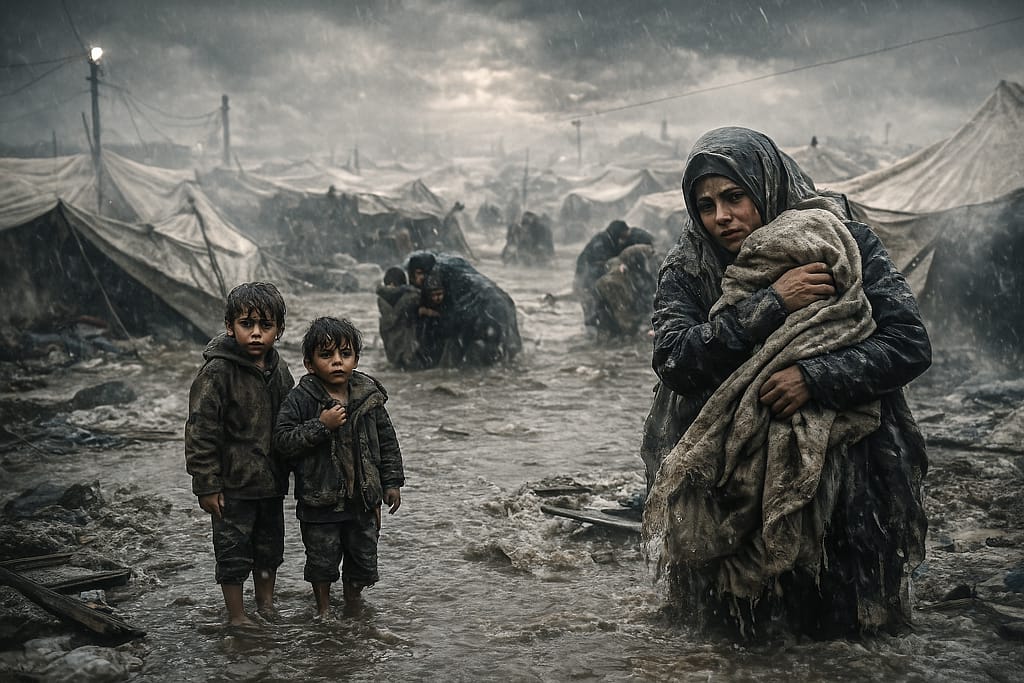
GAZA STRIP — Torrential winter storms have swept through makeshift displacement camps across Gaza, flooding tents, washing away belongings, and placing thousands of already vulnerable families in renewed danger.
For civilians who fled bombardment only to find temporary refuge under thin sheets of plastic and fabric, the rain has become yet another enemy — silent, relentless, and unforgiving.
Camps Turned Into Mud and Water
Across northern and central Gaza, heavy rainfall combined with poor drainage has transformed displacement camps into muddy flood zones. Water rushed through tent rows overnight, soaking mattresses, clothing, food supplies, and medical essentials.
Many families were forced to stay awake through the night, desperately trying to dig shallow trenches or elevate bedding with scraps of wood and stone.
“We escaped the bombs to survive,” one displaced father said. “Now the rain is destroying what little we have left.”
Children huddled together for warmth as temperatures dropped, while parents struggled to keep infants dry amid collapsing tents and rising water levels.
Children, Elderly Face Heightened Risk
Humanitarian workers warn that flooding dramatically increases health risks, particularly for children, pregnant women, and the elderly. Standing water creates ideal conditions for disease outbreaks, while cold exposure raises the threat of hypothermia.
Medical teams report an increase in respiratory infections, skin diseases, and untreated injuries as access to healthcare remains severely limited.
“These are not natural disasters alone,” a relief worker said. “They are disasters compounded by displacement, siege, and the absence of adequate shelter.”
Aid Struggles to Reach the Camps
International aid agencies say their ability to respond remains constrained by damaged infrastructure, fuel shortages, and restricted access. Emergency supplies such as waterproof tents, blankets, heaters, and clean drinking water are in critically short supply.
Roads leading to several camps have become impassable due to flooding and debris, delaying relief deliveries at a time when speed is crucial.
Despite these challenges, volunteers and local rescue teams continue working through the storm, distributing what limited resources they have.
Displacement With No Safe Alternative
More than a million Gazans remain displaced, many of them forced to move multiple times during the conflict. For families now watching floodwaters consume their last possessions, there is often nowhere else to go.
“Every time we move, we lose more,” said a mother of four sheltering in a flooded tent. “We are running out of strength.”
Aid organizations warn that without immediate international intervention, worsening weather conditions could lead to a humanitarian catastrophe within the camps.
A Crisis Beyond the Headlines
As global attention shifts between crises, those trapped in Gaza’s flooded camps say they fear being forgotten — not by the storm, but by the world.
What they are asking for is not comfort, but protection: safe shelter, medical access, and the basic dignity of surviving winter without fear.
Until then, the rain continues to fall on families who have already lost almost everything.