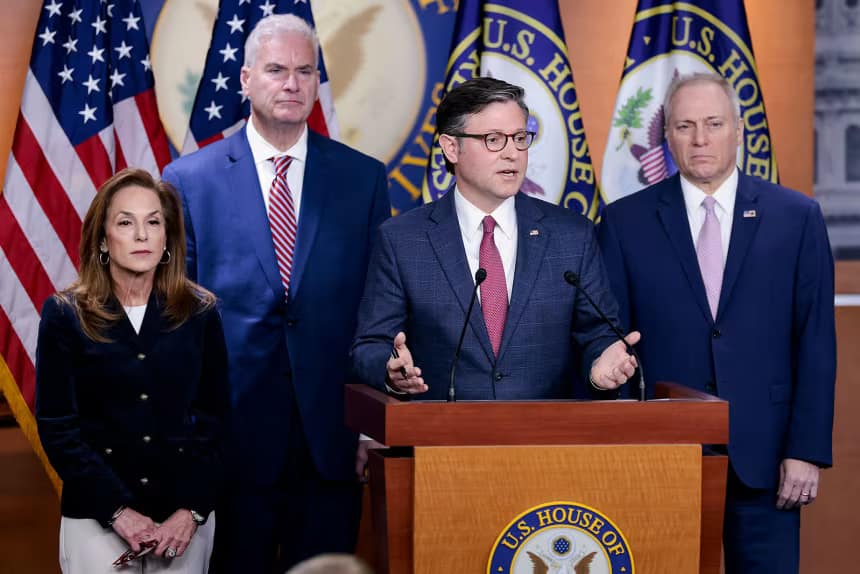
🇺🇸 A Divided GOP Pushes Its Health Care Message — With No Plan to Stop Soaring Premiums
With enhanced ACA subsidies set to expire in just weeks, Republicans in Congress are pressing forward with a health care agenda that notably avoids addressing the looming spike in insurance premiums — even as many in the party warn of severe political fallout in 2026.
Despite private pressure from swing-district Republicans, party leaders in both chambers have chosen to focus on long-standing conservative proposals like expanding Health Savings Accounts (HSAs) rather than intervening to stop premium hikes that could hit tens of millions of Americans on January 1.
The decision marks a major political gamble for GOP leadership — one that has already sparked rare public dissent inside a conference that controls only the slimmest of majorities.
🔴 GOP Moderates Warn: Letting Subsidies Expire Will Be “Devastating”
Enrollees in ACA plans are projected to see premiums double next year — about $1,000 more per person on average, according to KFF.
The Congressional Budget Office estimates 2 million Americans could lose coverage entirely.
Moderate Republicans say failing to act is not an option. Many are exploring:
✔ lobbying President Trump directly
✔ pushing leadership privately
✔ “nuclear option” — a bipartisan discharge petition
Rep. Nicole Malliotakis (R-NY) said she plans to appeal to the White House:
“The president is very interested in addressing this issue. If not, there’s always the nuclear option.”
Five Republicans have already signed onto a House discharge petition to force a vote, a rare move that bypasses leadership entirely.
🔵 GOP Leadership Chooses a Different Path
Speaker Mike Johnson and Senate GOP Leader John Thune have opted not to support extending the subsidies — at least for now.
Instead, Republicans are pushing a package centered on:
- Expanding Health Savings Accounts
- Boosting cost-sharing reduction funding
- Offering limited assistance through alternative mechanisms
In the Senate, Republicans will vote Thursday on a temporary HSA-based plan from Sens. Bill Cassidy and Mike Crapo, offering financial help to lower- and middle-income Americans for two years.
But neither the GOP plan nor the Democratic bill extending subsidies for three years is expected to pass. Both votes are seen largely as political messaging ahead of the 2026 election cycle.
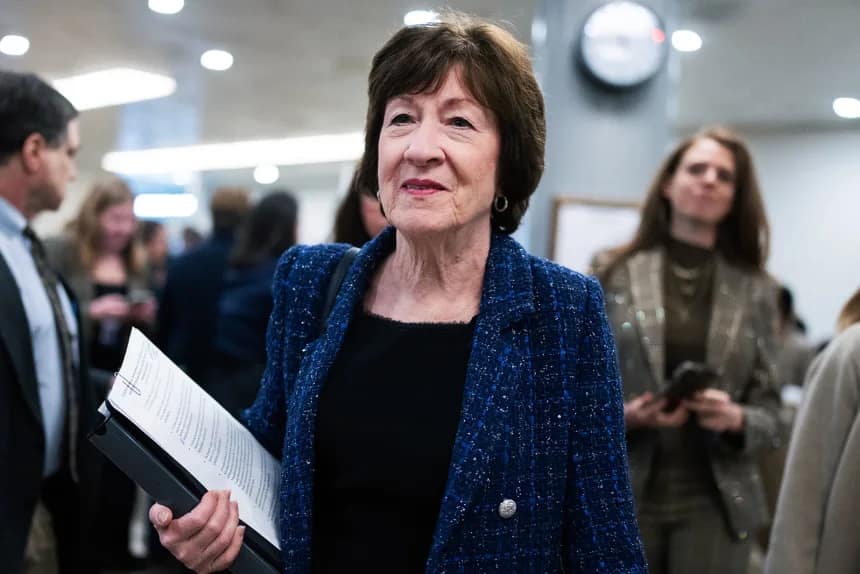
🔶 Chaos Behind Closed Doors: “Like Nailing Jell-O to a Wall”
Inside private Republican meetings, tensions are boiling over.
Some hardliners have reluctantly shown willingness to consider a short-term extension — especially after moderate members warned the party would be punished at the ballot box.
Rep. Ralph Norman (R-SC) admitted the conference is deeply split:
“It’s like nailing Jell-O to a wall. Extend them for how long? That’s the contentious part.”
Even conservative icon Jim Jordan warned that allowing Democrats to force a vote through a discharge petition would be worse than negotiating an extension internally.
Vulnerable California Republican Kevin Kiley delivered a blunt warning:
“If we go home without addressing the subsidies, that is a huge loss. No single policy change has more impact on affordability.”
🔵 Thune Hints at a Bipartisan Deal — If Democrats Are Willing
Sen. John Thune did not rule out a compromise to extend ACA subsidies but said Democrats must be willing to negotiate reforms:
“Are Democrats willing to solve the problem, or make it a political issue?”
A bipartisan solution would require overturning entrenched positions on both sides — and time is quickly running out.
Reconciliation remains an option, but GOP leaders are skeptical after the grueling fight over Trump’s earlier tax-and-spending package. Trump himself signaled disinterest:
“We don’t need it.”

🔥 Eight Years After the Failed ACA Repeal, Republicans Still Lack a Unified Health Strategy
The current infighting highlights a larger truth:
The GOP still has no cohesive health care plan, even nearly a decade after the party’s high-profile failure to repeal and replace Obamacare.
Leaders are now racing to craft a set of bills to bring to the House floor next week — but none currently address the subsidies set to vanish on December 31.
For millions of Americans, the clock is ticking.
For Republicans, the political consequences may not be far behind.