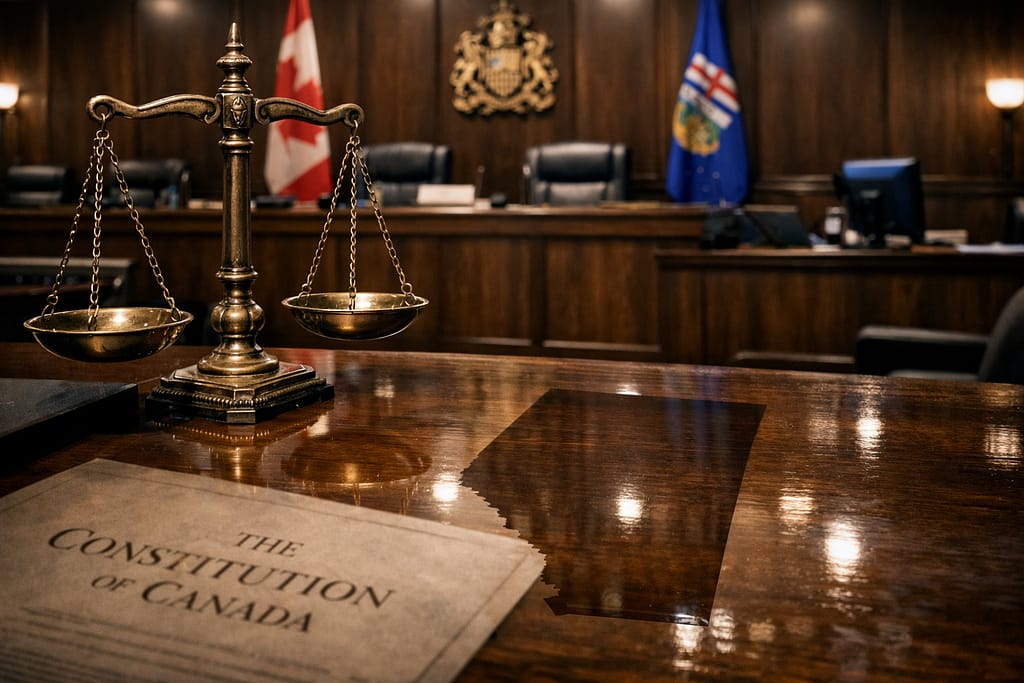
The “Independent Alberta” Movement — Political Roots, Legal Barriers, and Public Support
The idea of Independent Alberta—once a fringe political concept—has resurfaced in recent years as a visible and organized movement. Fueled by long-standing grievances with Ottawa, renewed grassroots activism, and online mobilization, Alberta separatism has re-entered Canada’s political conversation in a meaningful way.
While independence remains far from mainstream policy, developments in 2025 have pushed the issue into public debate once again.
Political Background: Where Alberta Separatism Comes From
Alberta separatism is rooted in decades of what many residents describe as Western alienation—a belief that the province’s economic contributions and interests are undervalued by the federal government in Ottawa. Disputes over energy policy have been central to this sentiment, dating back to the federal National Energy Program of the 1980s, which remains a symbolic flashpoint for many Albertans.
Although talk of separation has appeared periodically—most notably during the 1930s economic crisis and again during energy disputes in later decades—no serious breakaway movement gained traction until the modern era. In recent years, several small parties and advocacy groups have revived the idea of independence or radical autonomy, including the Wildrose Independence Party, the Independence Party of Alberta, and the Republican Party of Alberta.
The governing United Conservative Party, led by Premier Danielle Smith, has rejected secession but embraced a confrontational stance toward Ottawa through legislation framed as “sovereignty within a united Canada.” Legal experts emphasize that these measures do not authorize independence or override the Canadian Constitution pasted.
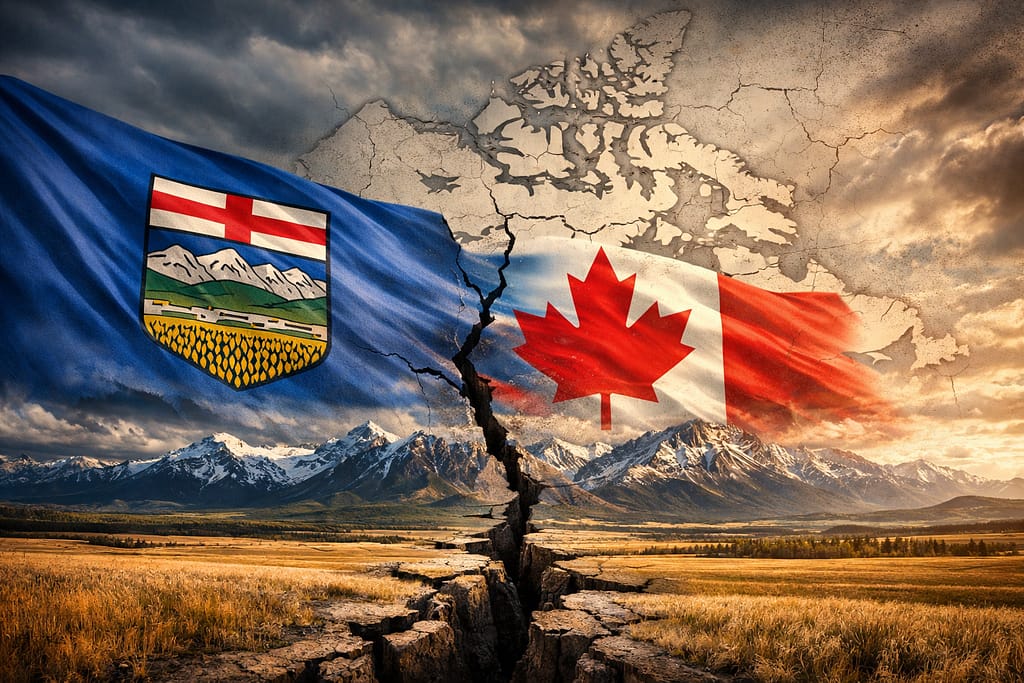
Legal and Constitutional Reality
Under Canadian law, Alberta cannot unilaterally leave Canada.
The Supreme Court of Canada’s landmark 1998 Secession Reference ruling made clear that even a successful referendum would not grant automatic independence. Instead, it would trigger negotiations governed by constitutional amendment rules. Parliament later reinforced this framework through the Clarity Act, which requires a clear question and a clear majority before talks could even begin.
Any actual separation would require constitutional amendments approved by Parliament and a majority of provinces, while also resolving complex issues involving citizenship, debt, borders, and Indigenous treaty rights.
In late 2025, an Alberta court struck down a citizen-led independence petition, ruling that a referendum question proposing secession violated the Constitution Act, 1982. The court noted that Alberta could not guarantee continued protection of Charter rights or Indigenous treaties outside the federal framework pasted.
Public Support: How Popular Is Independence?
Polling suggests that support for Alberta independence remains significant but clearly minority.
Surveys conducted in 2025 consistently place support between roughly 20% and 30% of Albertans. While a larger share of respondents express dissatisfaction with Ottawa and federal policies, most still stop short of endorsing full separation.
Notably, a competing grassroots campaign advocating for Alberta to remain in Canada has gathered hundreds of thousands of signatures, underscoring the depth of opposition to secession among many residents pasted.
The divide appears less ideological than emotional—reflecting frustration over federal-provincial relations rather than a consensus desire to leave Canada altogether.

Opposition and Institutional Pushback
Opposition to independence is broad and institutional.
Premier Danielle Smith has repeatedly stated that her government’s objective is greater provincial autonomy—not separation. Federal Conservative leader Pierre Poilievre and leaders from other national parties have also rejected any notion of Alberta leaving the federation.
Business leaders, economists, and legal scholars warn that even a referendum could undermine investor confidence and destabilize markets. Comparisons are often drawn to Quebec’s separation referendums, which produced long-term economic uncertainty without resulting in independence.
Indigenous leaders and constitutional experts further stress that any unilateral move would be legally invalid without Indigenous consent, given that treaties were signed with the federal Crown—not provinces pasted.
“Rise of Alberta” and Online Mobilization
A newer grassroots network known as Rise of Alberta has played a major role in amplifying independence messaging online. Through social media campaigns, merchandise, rallies, and petition drives, the group frames secession as a populist response to federal overreach.
Its messaging emphasizes control over energy resources, taxation, and governance, often borrowing stylistic elements from U.S. political branding. While critics dismiss the movement as performative, its digital reach has undeniably elevated the visibility of Alberta separatism in 2025 pasted.
The Bottom Line
Alberta’s independence movement is louder and more organized than in previous decades—but it remains constrained by law, economics, and public opinion.
While frustration with Ottawa continues to fuel separatist sentiment, constitutional barriers make unilateral independence impossible, and current polling suggests that a clear majority of Albertans are not prepared to leave Canada. For now, the movement’s greatest impact may be its ability to reshape provincial-federal negotiations rather than redraw the country’s borders.