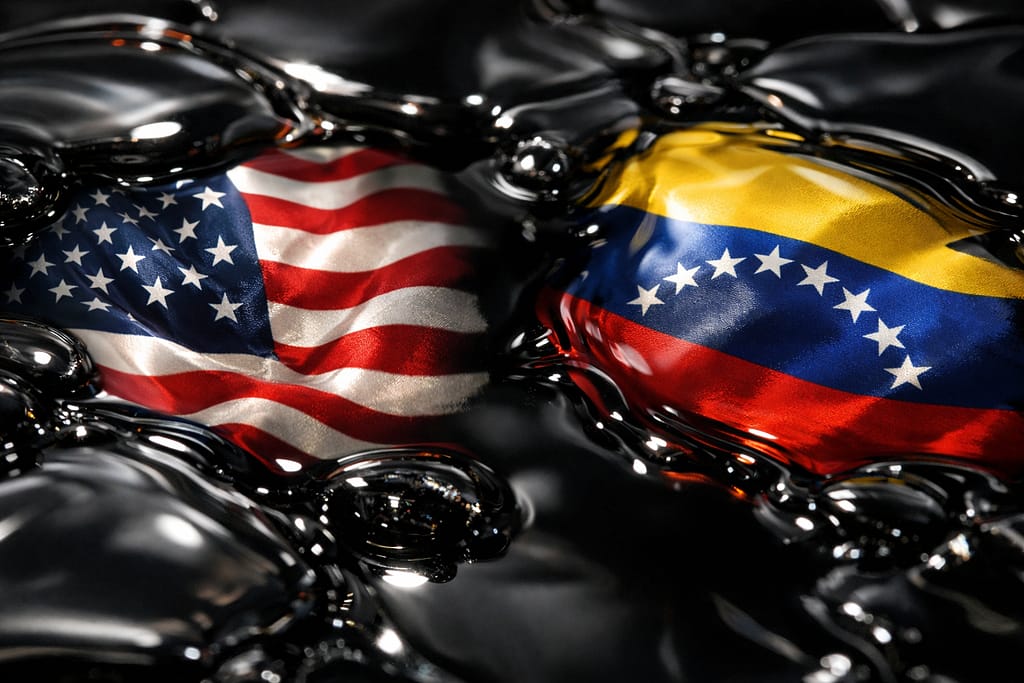
Is U.S. “Management” of Venezuela’s Oil a Modern Occupation? A Legal and Political Deep Dive
Disclaimer: This article is an analytical explainer based on widely discussed public claims, legal standards in international humanitarian law, and political-science frameworks. The situation around Venezuela can evolve rapidly as new official statements, agreements, or on-the-ground realities emerge. This is not legal advice.
Why the Word “Occupation” Is Suddenly Back
When people hear “occupation,” they usually picture tanks, checkpoints, and a foreign flag over government buildings. But in today’s world, the most powerful form of control can be something else entirely: control over money, energy, and strategic resources—especially oil.
That’s why the idea of the United States “managing” or heavily directing Venezuela’s oil sector instantly triggers a charged question:
Is this a modern occupation—an occupation without annexation, driven by energy rather than territory?
To answer honestly, we have to separate political language from legal definitions, then examine what actually matters: who controls the ground, who controls the contracts, and who controls the revenue.

1) What “Occupation” Means in International Law (And What It Doesn’t)
In international law—especially international humanitarian law (IHL)—occupation is not a vague moral accusation. It has a specific threshold.
A) The Core Standard: “Effective Control”
A territory is generally considered occupied when it is placed under the effective authority of a foreign armed force. In plain terms:
- A foreign power can issue orders
- Those orders are enforced
- Local authorities are unable to operate freely without the occupier’s permission
This is commonly summarized as effective control.
B) Influence Is Not Automatically Occupation
Not everything that feels like domination is legally “occupation.”
Examples that usually do not meet the strict legal test:
- Economic sanctions
- Political influence
- Corporate activity (even major foreign oil companies)
- Court control over assets located abroad
- Loans or “conditional” economic support
Those can be coercive or neo-imperial, but they aren’t automatically occupation in the legal sense.
2) Resource Control Under Occupation: You Can “Administer,” Not “Own”
Even when a formal occupation exists, international law traditionally treats the occupier as a temporary administrator, not the owner.
A widely referenced principle is that the occupier may manage public assets in a way closer to usufruct (a right to use while preserving the asset), meaning:
- You cannot legally treat the resource like your private property
- You cannot strip or “loot” the resource for pure benefit
- You are expected to preserve the asset and ensure basic governance
This is why the oil question matters so much: large-scale extraction and revenue capture can look like resource appropriation, which is politically explosive and legally contested.
3) Venezuela’s Oil: Why This Issue Is So Sensitive
Venezuela is not just “an oil country.” Oil is the backbone of state capacity:
- Government revenue and budgets
- Fuel supply and electricity stability
- Imports of food and medicine (directly or indirectly)
- Currency and inflation dynamics
- Political power inside the country
So when outsiders influence oil production, oil exports, or oil revenue flows, Venezuelans and the wider region often read it as control of the nation itself—even if no formal occupation exists.

4) The Key Question: What Does “U.S. Managing Venezuela’s Oil” Actually Mean?
This is where debates often go wrong. People argue over a label (“occupation”) before clarifying the reality.
In practice, “management” could mean very different things:
- Regulatory leverage (sanctions, licenses, waivers, compliance rules)
- Corporate presence (U.S.-linked firms operating under agreements)
- Security involvement (protecting infrastructure, ports, or fields)
- Direct administration (foreign authority deciding production and revenue use)
- Trust-like revenue control (oil revenue held/allocated through external mechanisms)
Each scenario has a different legal and political status.
5) A Simple Test: Three Questions That Decide Whether “Occupation” Is Plausible
If you want the cleanest way to judge the “modern occupation” claim, focus on three questions.
Question 1: Is There Effective Foreign Military Control on the Ground?
This is the closest thing to a “switch” in legal terms.
- Are foreign forces controlling oil regions, ports, and transport routes?
- Are they issuing orders that local authorities must follow?
- Could Venezuela freely stop this arrangement, or is it imposed by force?
If yes, the “occupation” argument becomes much stronger—because it approaches the legal threshold.
If no, and “management” is mainly economic, legal occupation is harder to claim.
Question 2: Who Signs the Contracts, and Who Sets the Rules?
Oil is power because it is governed by contracts:
- Who decides which fields operate?
- Who decides the buyers, pricing mechanisms, and export routes?
- Who controls the national oil company’s operational decisions?
If foreign officials (or a foreign-directed authority) effectively decide these matters, many analysts will argue this resembles external administration—a hallmark of modern “resource control” politics.
Question 3: Who Controls the Revenues—and Where Do They Go?
This is the heart of the “resource occupation” debate.
- Do revenues go to Venezuelan public institutions transparently?
- Are funds allocated to public services, infrastructure, wages, and imports?
- Or are revenues captured externally, frozen, redirected, or conditioned in ways that bypass Venezuelan democratic oversight?
Even without formal occupation, heavy external control over revenue can be framed as economic domination or neo-colonial leverage, especially if it deprives the population of benefits.
6) The Case for Calling It a “Modern Occupation”
Supporters of the “modern occupation” framing usually point to these ideas:
A) Oil + Force = The Classic Occupation Pattern (Updated)
Historically, occupation often followed strategic resource interests. In modern settings, control can be less visible:
- not a full takeover of ministries,
- but a takeover of “the state’s bloodstream”: oil production and revenue.
B) Controlling Oil Can Equal Controlling the State
When a country’s fiscal lifeline is externally steered, it can weaken sovereignty even if flags and borders remain unchanged.
C) “Occupation Without Annexation”
Some political theorists argue that modern dominance doesn’t always require annexation. It can operate through:
- security arrangements,
- economic dependency,
- external revenue channels,
- and political conditionality.
In that framing, the term “occupation” is used politically, not strictly legally.
7) The Case Against Calling It “Occupation” (Legally Speaking)
Critics of the occupation label usually argue:
A) Occupation Has a High Legal Threshold
Without effective military control, “occupation” is not the correct legal classification.
B) Consent Changes the Framework
If a recognized Venezuelan authority (or an internationally recognized transitional authority) invited assistance or signed agreements, then the arrangement becomes closer to:
- bilateral cooperation,
- conditional support,
- or externally backed restructuring
Even if that “consent” is politically disputed, it complicates the occupation claim.
C) Sanctions and Licenses Aren’t Occupation
Even harsh sanctions regimes—while deeply coercive—are not occupation under IHL. They fall into different legal debates: sovereignty, non-intervention, human-rights impact, and proportionality.
8) Three Realistic Scenarios—and What Each One Would Be Called
Here’s a practical way to frame this without propaganda.
Scenario A: Direct Control + Security Enforcement
- foreign forces protect/secure oil zones and infrastructure,
- foreign authority decides production and exports,
- revenue allocation is externally managed.
Most likely label (legal/political):
- legally closer to occupation (depending on the facts),
- politically framed as resource occupation or modern occupation.
Scenario B: Strong Influence Through Companies + Contracts
- Venezuelan institutions formally sign,
- foreign firms operate under agreements,
- revenue flows remain Venezuelan but may be monitored/conditioned.
Most likely label:
- heavy external influence / economic leverage, not occupation.
Scenario C: Sanctions-Driven “Permission Economy”
- production and exports depend on external licenses and waivers,
- foreign governments shape what is “allowed” financially,
- assets abroad are controlled through courts or compliance systems.
Most likely label:
- economic coercion / sanctions dominance, not occupation (legally),
- but often described politically as economic colonialism.
9) FAQ: The Questions People Ask (And Straight Answers)
Does controlling oil assets abroad equal occupation?
Not in the strict legal sense. It can be coercive and sovereignty-impacting, but it is not the same as effective control of territory.
Do sanctions alone qualify as occupation?
Generally, no. Sanctions are a different legal category—even when their humanitarian impact is serious.
When does “oil management” become legally dangerous?
When resource extraction or revenue capture looks like:
- appropriation,
- permanent transfer of ownership,
- or exploitation that does not benefit the local population
Those situations can trigger debates about illegality, pillage, or violations of sovereignty—depending on context and evidence.
Conclusion: So… Is It a Modern Occupation?
The most accurate answer is:
- Legally, calling it “occupation” depends on effective control—especially military authority on the ground.
- Politically, the label “modern occupation” is often used when external power controls oil decisions and oil revenues, even without classic occupation imagery.
If the reality becomes:
- force-backed control, plus
- external administration of production and exports, plus
- external control of revenues,
…then the “modern occupation” framing grows far stronger, both morally and legally.
But if the reality remains:
- primarily sanctions leverage,
- corporate operations under contracts,
- and formal Venezuelan administration,
…then “occupation” is likely more rhetoric than law, though debates about sovereignty, coercion, and legitimacy will still be intense.